
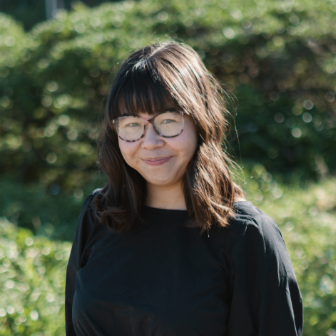
‘It helps me believe in the future’: Maddie Ballard on why home sewing is more relevant than ever
Maddie Ballard started sewing in June 2020 as a way to cope with the pandemic. Here, she explores why the hobby has stuck around…
In June 2020, my partner and I moved home to Aotearoa New Zealand after two years in the UK. We were fleeing Covid and left in a rush, moving in with my partner’s parents. Jobless and anxious, I spent the better part of my time scrolling Instagram between cover letters – and thank goodness I did, because one day, an acquaintance posted a photo of a beautiful skirt she’d made. I hadn’t considered sewing my own clothes since the long-ago days of fabric tech in high school, but I found myself at a loose end. My partner’s mum had a sewing machine and, with great patience, showed me the ropes.
A couple of days later, I bought my first ever sewing pattern: the Demeter Dress, a loose midi dress with a gathered waist, designed by indie patternmaker Anna Allen. Making that dress was the most exciting thing I’d done in years. Suddenly, I saw textiles and clothing with a whole new perspective. I noticed the ingenious collar stand on the inside of my partner’s shirts. I marvelled over the welt pockets on a coat. I admired how neatly someone had finished the inseam pockets of my favourite skirt. So much artistry, so much beauty, had been hiding in plain sight. Looking for it was a way of loving the world when so much was falling apart.
Over the next few difficult months, I sewed a wardrobe of wonky, lovely garments and learnt the most new practical skills I had since childhood. Four years later, at least 80% of my wardrobe is handmade and I always have the next project in mind (right now, it’s a linen Ines Dress for the Southern Hemisphere summer). Sewing has seen me through the last four years, the most tumultuous and interesting of my life. Against a backdrop of huge change – moving cities, breakups, career shifts, profound grief and joy – I’ve made skirts and shirts, jackets and dressing gowns.
Since noticing more and more people my age starting to sew, I’ve been wondering about its worth as an activity. Why, in the internet era, and when every hobby from aquarobics to gin-making exists, are domestic sewing machine sales still rising and 3 million people tuning in to watch The Great British Sewing Bee? At a time when clothing has never been more readily available, why has home sewing experienced a renaissance?
I like to think it’s because people still want to be in touch with the textile traditions of the past. My great-grandmothers on both sides would have sewed clothes for their families. My own sewing machine is a hand-me-down from my grandmother, who used it to hem trousers and let out waistbands for two decades. Sewing wasn’t a leisure activity for my ancestors; I’m lucky that it’s a leisure activity for me. But doing it now helps me feel close to them, part of some longer tradition of that holiest act: making and remaking.
In the past four years, I’ve learnt that making a dress is quite a different endeavour from buying one. It takes hours to make a dress, which means a dress is an expression of time spent and care exercised. You have to be really sure you want it, and you really have to think about what you want, because you can control everything from the neckline, to the print, to whether it has pockets (it always has pockets). In the era of fast fashion, there’s a disconnect between where clothes come from and who wears them. Most people don’t know who made the clothes they wear, or how much labour goes into any garment. But every single piece of clothing was made by human hands, through human labour, and should be precious.
There’s something about the embodiedness of sewing I love. The way, after hours and hours of practice, my foot knows exactly how much pressure to apply to the sewing machine pedal. The way my hands read the texture and weight of a piece of fabric; the way the back of my neck starts to ache if I sit at the machine for too long. Sometimes I think I sew just to get out of my head and into my body. Specifically, sewing gives me a way out of language. It offers the rewards of creativity with the pressure to be articulate. It’s the shadow creative act to writing, using quite a different part of my brain. I’ve learnt that both acts are crucial to my sense of balance.
What’s more, sewing is an expression of self and values. Whether you like it or not, what you wear says something about you – even if that something is ‘I want to be invisible’ or ‘I don’t care what I look like’. It’s thrilling and terrifying to be perceived, and sewing has helped me think more intentionally about what kind of self I want to present to the world. What it means to be in my female Asian body. What I want people to know about me when they look at me. I can’t control people’s perceptions of me, but I can assert something important about myself when I choose to make a modern dress with traditional cheongsam closures, or a jumpsuit that is comfortable, feminine, and from the most sustainable cloth I can afford. Everyone is doing this to some extent when they get dressed. But sewing makes the act of getting dressed feel so much more infinite. It’s allowed me, for the first time in my life, to wear exactly what I want – not just what’s already available – made from materials I’ve consciously sourced.
All of this to say, sewing is a political act. In the past century, sewing has acquired a bit of a conservative image, all craft fairs and cottagecore. And it’s important to acknowledge that its high start-up costs can make it an initially inaccessible hobby; there’s a reason most hobby sewists are middle-class white women. But I think sewing can also be a radical act. Not only is it a way out of fast fashion; not only is it a time-honoured medium for political activism – it’s also a way to know yourself, and spend time in a conscious, embodied way.
Above all, sewing is an act of control: a way of coaxing order and shape from chaos. That was important in June 2020, when so much felt uncontrollable – but things hardly feel more controllable now. We are facing genocide, a rapidly developing climate crisis, a terrifying US election. We walk around with the internet, that scaremonger, in our pockets. It’s easy to feel overwhelmed and exhausted by contemporary life. There’s a lot to be said for controlling something small, even if it’s just a French seam.
Sewing is an act that continues to give my life meaning, even, or especially, when times are hard. Writer and fabric historian Sofi Thanhauser has written that sewing is an act of ‘investment in a future self’, like cooking or gardening. Sewing implies a belief in there being a future occasion to wear whatever garment you’re making. I sew because it helps me believe in the future; in the person who will wear this new dress. When I plan a garment, I’m thinking, I hope there’s more. When I sew it, I’m saying, I think there is.


